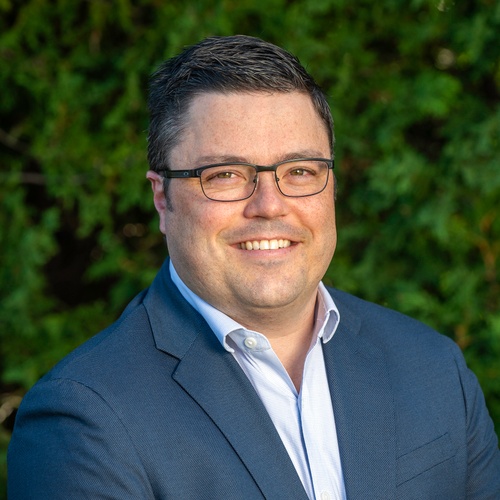
Moving Recycling Forward: Andrea Calarco’s Resource Solutions Journey
For nearly 20 years, Andrea Calarco has played a key role in helping Casella maximize the value of recyclable materials through strong customer relationships, industry expertise, and a deep understanding of recycling operations. From her early days in hauling sales to her current role supporting material recovery facilities (MRFs), customer partnerships, education initiatives, and industry advancement, Andrea brings a unique blend of operational expertise and problem-solving to everything she does. Her work sits at the intersection of people, processes, and sustainability, helping ensure recyclables find their highest and best use while keeping Casella’s operations running efficiently.
Nearly two decades into your career at Casella, what has kept you engaged in the waste and recycling industry?
I started as an inside sales representative in Geneva, NY. Like most people in this business, I never grew up aspiring to a career in waste and recycling, but there’s a saying that once you get into the industry, something about it makes you want to stay. For me, it’s the ever-changing landscape. There’s always something new and always a problem to solve. What has kept me at Casella is the culture and the team.
Your role touches everything from customer relationships and market development to education and policy. What does a typical day look like?
My number one priority is feeding our MRFs by maintaining our intercompany and third-party hauler relationships and bringing in new business. Beyond that, I help keep our education materials current, find ways to reduce contamination, pursue grants to upgrade our facilities, monitor recycling legislation, and maintain industry relationships. After nearly 20 years in the industry, I also love being able to help colleagues throughout the organization.
Having worked on both the hauling and recycling sides of the business, what perspective does that give you today?
Starting on the hauling side gave me a strong foundation. I began in inside sales in Geneva and later worked in outside sales in central Massachusetts, so I understand what our sales representatives and hauling divisions deal with every day, the pressures, customer objections, and what is realistic on a route. Working in different markets also taught me that what works in one region doesn’t always translate to another. When I bring something from the recycling side to the street, I want to make sure it works for the people who actually have to deliver it.
A key part of your role is ensuring our MRFs operate efficiently. What does it mean to keep a facility at its “sweet spot,” and why is that so important?
Each MRF is designed to process material at a certain throughput, measured in tons per hour. Too little volume means we aren’t meeting the daily tonnage the facility is designed to process, while too much can compromise the quality of the finished product. The sweet spot is consistent daily volume that allows the plant to run efficiently. My role is to help maintain that volume through the customers we bring in and constant communication with our operating teams.
In an industry built on partnerships, what helps create lasting relationships with customers?
I love building relationships with our customers. They come to us with a need, and we’re experts in the industry, so staying current on what’s happening in waste and recycling is how I stay useful to them. Sometimes, the best opportunities come when we don’t have a ready answer. That’s when we get to sit down, understand the challenge, and problem-solve together. Those are the relationships that last.
Why is contamination so detrimental to recycling, and how do you help people understand its impact?
I like to ask customers one question: What makes something recyclable? Most people think it’s the material itself or the little triangle on the product. The real answer is that someone has to be willing to buy that material and turn it into a new product. If there’s no buyer, it isn’t recyclable, no matter what it’s made of. Our job is to find outlets for recyclable materials and provide those end markets with the cleanest possible feedstock. Contamination works directly against that. It lowers the quality of the finished bale, which can affect what a buyer will pay or whether they’ll accept it at all. Some contaminants can also interfere with processing and require us to shut down equipment to remove them.
Education plays a critical role in improving recycling outcomes. How can better information help reduce contamination?
I genuinely believe people want to do the right thing, but many simply aren’t sure what belongs in the recycling bin. The challenge is closing the feedback loop. We’ve been working on ways to trace contamination back to where it originates so we can educate customers directly. Instead of a general “please recycle better” message, we can tell someone exactly what showed up and where. That’s how behavior changes, with information that is timely and personal.
As you look ahead, what gives you confidence about the future of recycling and resource recovery?
As landfill capacity continues to diminish across the Northeast, there is a growing recognition that recycling and resource recovery aren’t just environmental priorities; they’re business necessities. Customers want to get it right, end markets need clean, high-quality material, and the tools, technology, and data to connect the two are catching up. After nearly 20 years in this industry, this is the closest I’ve seen those pieces align, and that’s incredibly encouraging.