6 September 2022

CEO: Maersk considers investing in wind and solar parks
Søren Skou, CEO of Mærsk, said that Mærsk could invest a large part of its profits this year in wind and solar energy. Because of the current energy crisis and the green transition, the group's vessels are running low on fuel. The main reason for this direction of investment is therefore to be able to get enough fuel for the group's vessels.
Another 3GW offshore wind project 'unveiled' in Australia by Copenhagen Energy
Denmark's Copenhagen Energy is aiming for large-scale offshore wind projects around the world. It currently has a pipeline of 28-29GW of offshore wind power located in Denmark, Australia, Italy, Ireland and the Philippines, which it plans to develop together with some of the world's largest companies. The company says that it has a total of 12GW of proposals underway in Australia, the latest of which is Samphire, north of Perth. The company plans to start construction of Samphire in 2029. At the same time the company hopes to start construction of its first offshore wind farm in Australia, Leeuwin, in 2026 and complete it within two years. RENEW ECONOMY believes this to be unlikely given the federal government's focus on establishing offshore wind zones in the eastern states first, and the exhaustive process of obtaining environmental approvals, community support and connection deals, let alone completing detailed feasibility studies.
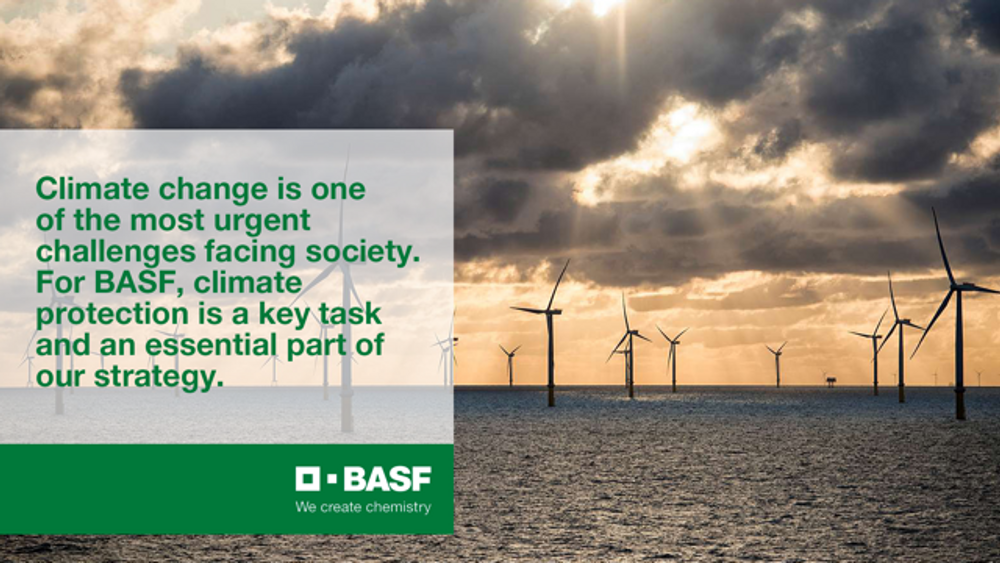
HEXICON selects design partner to pioneer floating wind power project in the UK
Hexicon has begun work with London Marine Consultants (LMC) on the design and planning of TwinHub, the first floating wind farm to be built in the Celtic Sea, located 16 km off the coast of Cornwall in South West England. The 32MW project, which won the UK's first floating wind auction in July this year, is expected to be completed by 2025-2027. Hexicon has now appointed LMC to design and plan the project, via the FEED (Front End Engineering Design). A geophysical survey of the site has just commenced and the findings will be used to further plan and design the project. The TwinHub project will use Hexicon's patented TwinWind® technology and is expected to be the first large-scale commissioning of a twin-turbine design for a floating wind farm.
TwinHub is a demonstration project that will be built within the existing Wave Hub demonstration park, located approximately 25 km outside of Hayle, Cornwall, UK. The project will have a total capacity of 32MW, equivalent to the electricity consumption of approximately 45,000 homes.
Kaunis Iron participates in the world's unique fossil-free ore transportation project
Kaunis Iron will invest around SEK 500 million in new electric trucks from Volvo to make its ore transport fossil fuel-free. Together with its partners Vattenfall, Volvo Trucks and Wist Last & Buss, Kaunis Iron has conducted tests, evaluated and analysed the results. Kaunis Iron says that one of the company's sustainable goals is to be fossil-free by 2025. If it succeeds, at current production rates it could reduce CO2 emissions by around 15,000 tonnes per year, equivalent to travelling around the world in a passenger car for around 3,000 laps, so there are large environmental benefits. The company says it will continue to focus on battery-powered electric vehicles for now and that its technological development has already reached a certain level of achievement.
Azelio and Elum Energy partner to tackle the energy storage market
Azelio and Elum Energy have begun working together to develop solutions to maximise the use of renewable energy and to develop efficient control solutions for installations combining solar cells and long-term energy storage. The solution brings together the advanced technologies of both companies and means that Elum's monitoring works in tandem with Azelio's thermal energy storage system. In situations where grid connections are unreliable, expensive and based on fossil fuels, the advanced control algorithms in Elum's ePowerControl MC combined with the innovative energy storage technology in Azelio's TES.POD system provide a solution for stable and reliable energy. One of the most important applications for the collaboration between Azelio and Elum is off-grid agriculture, where long-term energy storage is necessary. Unlike the diesel generators currently in use, the joint solution aims to meet 80% of the electricity demand through renewable energy and long-term energy storage. The goal is to significantly reduce the fuel consumption of the project in order to provide the customer with more savings and price stability over time.
What we're reading
- Winter is coming: Russian gas supply cuts cause price volatility and potentially power cuts (Rystad Energy)
- Macron urges French to save energy, says ready to send gas to Germany (France24)
About Nordic Green News
The Nordic countries are some of the most dynamic and successful economies in the world. They are also leaders in sustainability, from renewable energy, biofuels, carbon capture and storage and the hydrogen economy, circular economy business models and battery development, the Nordics are pioneers in policy design, technology development and consumer uptake. Mundus Nordic Green News is covering this transition for the international community. Every day we curate the stories of most relevance to international businesspeople and policy experts from the flow of news. Mundus Nordic Green Indices summarise the meta-data from our daily coverage to enable easy tracking of trends. We supplement these with our own opinion pieces and commentary.
 Powered by Notified