17 September 2021

EU member states call for time extension on taxonomy discussion
The taxonomy criteria set by the EU commission regarding which organisations can be deemed sustainable relative to climate change has sparked a debate among member states, which is especially vigorous in Sweden and Finland. As these discussions are not yet finalised, the deadline for discussing the debated criteria is extended by two months (ATL).
Swedish government presents 12 billion SEK budget for environment and climate efforts
“Sweden will need a green restart post pandemic.”, said the Minister for Gender Equality and Housing Märta Stenevi (MP). To this end, SEK 12 billion is distributed to support both companies and individuals in pursuing a climate neutral Sweden. The bulk of this budget is allocated to the renewable energy producers and the transport industry. SEK 1.9 billion is invested in biogas producers to make biogas more competitive on the market during 2022-2024. Additionally, a total of SEK 1.3 billion is invested in supporting the established electric-bus premium (discount on purchase) as well as environmentally friendly trucks and other electric machinery during 2022. To meet industry complaints of lack of competency in the fields of sustainability, the government also proposes an investment of SEK 260 million to universities to match this demand. “We do this due to companies pointing out a lack of competency as one of the bottle-necks in making Sweden fossil free,” said Per Bolund, the Minister for Environment and Climate (Dagens Industri).
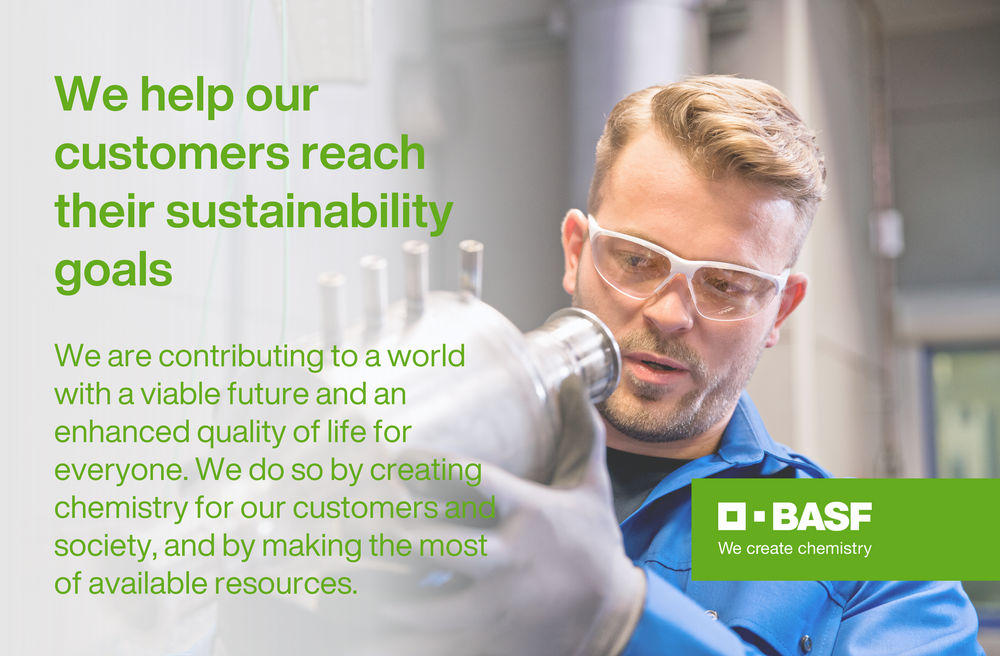
BASF and CATL sign agreement on battery materials
BASF SE (BASF) and Contemporary Amperex Technology Co., Limited (CATL) have announced a strategic partnership on battery material solutions, including cathodic materials (CAM) and battery recycling. The collaboration aims to develop a sustainable value chain for batteries, in support of CATL's location in Europe and contributes to achieving both companies' global carbon neutrality goals.
As the largest chemical supplier to the automotive industry, BASF has established a strong position in the CAM market, including a global manufacturing and R&D footprint, and a broad portfolio of medium to high nickel, manganese-rich, cobalt-free CAM. In Europe. CATL, a leader in innovative new energy technology, has launched its project to build its first European plant in Germany for lithium-ion battery production, accelerating the development of a local supply chain for European customers and consumers. (press release)
Wärtsilä swapping batteries on Dutch waterways
Finnish Wärtsilä has come up with a mobile battery swapping system for powering electric waterway vessels in the Netherlands. Supported by the Dutch Ministry of Infrastructure and Water Management, the charging network enables a pay-per-use model for replacing depleted batteries with fully charged ones. The first mobile battery solution was implemented on a ship 6 September 2021 and aims to support the decarbonisation of the shipping segment (press release, Cleantechnica).
Sasol, Haldor Topsøe expand licencing collaboration to grow sustainable fuels
Sasol and Haldor Topsøe have expanded their collaboration to jointly licence and develop technologies for producing sustainable synthetic fuels and chemicals through Fischer-Tropsch (FT) technology. On top of their current end-to-end solutions to produce synthetic fuels and chemicals, they now offer e-Fuels sourced from sustainable CO2, green hydrogen and renewable energy (press release).
Swedbank Robur launch “Climate Impact” fund to meet sustainability demand
Swedbank Robur has launched a Climate Impact fund that invests in companies that contribute to solving global climate challenges, primarily companies that have a clear connection to the UN’s Global Development Goals 7 (Affordable and clean energy) and 13 (Climate action). The 80 companies selected are mainly active within sectors such as renewable energy, green buildings and energy efficiency are targeted by the fund. To secure the fund, a Swedbank owned company, Swedbank Insurance with a managed capital of 300 billion SEK will be an anchor investor (press release).
Swedish Energy Agency forum cover foreign climate policies
While many Swedes are familiar with the climate goals of Sweden and the EU, they lack awareness of what is happening in Asia. To this end, a forum for global energy is arranged as a webinar focusing on electrification, Carbon Capture and Storage (CCS), and battery storage development in China, Japan, and South Korea. Although all 3 are targeting climate neutrality, they are lagging behind, as seen in the highlighted challenges:
-
China and renewable energy, where only 1% of produced hydrogen is green.
-
Japan has a 76% dependency on fossil fuels.
-
94% of the energy in South Korea is imported.
Sweden is therefore positioned to collaborate with the three countries regarding diffusion of sustainable innovation and a mutual technology transfer within fields such as battery storage and smart grids (Nordiska Projekt).
Nordea launches green loans to support sustainability goals
Companies in Norway are able to make green deposits that are earmarked for sustainability projects. The funds will be utilised for financing projects such as renewable solar- and wind energy, sustainable forestry, and green buildings. “When we as a bank simplify the handling of surplus liquidity for our customers, by supporting sustainable projects, it is a win-win situation,” said Anne Schult Ulriksen, Head of ESG at Nordea Markets, Corporates, and Institutions. The deposit offers a fixed interest for deposits between NOK 5 million to NOK 200 million that are locked for a period between 95 days and 6 months. By the end of the lock-in period, a report describing how the deposits are managed is provided as a means of documenting sustainability efforts. This green deposit is piloted in Norway before introducing it to the remaining Nordic countries, according to Nordea (press release).
Norway and the United Kingdom sign agreement on power interconnector
A treaty on electricity interconnection was signed in efforts to formalise power trading between the two countries, according to Britain’s Ministry for Business and Energy (BEIS). The signed agreement precedes the North Sea Link, their first electricity interconnector. As a result of shocking electricity prices in the partnered countries, the 1,400 MW cable will help reduce prices with savings that can total up to £3.5 billion over the next 25 years. Norway benefits by importing surplus hydropower to Britain that is able to balance intermittent wind power (Nettnord, Reuters).
Measures for high electricity prices by incoming Labour-led government in Norway
In the midst of surging electricity prices in Norway the new government in Norway previews measures to mitigate the effect on Norwegian households. Until discussions between the different parties are finished, no assurance regarding what can be provided to the public about what the policies will be. The Red-Green bloc believes in action to reduce electricity fees and taxes on electricity. “I am sceptical towards removing the electricity tax as the owners of the largest houses benefit the most. However, a threshold where the electricity fees automatically reduces when the price of electricity increases. Otherwise, a compensation via the housing allowance offers a meticulous measure,” said Espen Barth Eide, Energy spokesman for the Labour party. He continues that the price will increase before it reduces, where Norwegians need to use electricity wisely by charging their car and heating their homes at night when the price is at its cheapest (Microsoft News).
State of Green name new Chair of Board: Jeff Gravenhorst
Jeff Gravenhorst has been elected as the new Chair of the Board of Directors for State of Green, a not-for-profit public-private partnership from Denmark that helps over 600 companies in marketing Danish green solutions on the international market. With a rigorous background of targeting the UN’s global goals for sustainable development at Rambøll, Gravenhorst takes on an important role to bring green experience to the State of Green. Denmark aims to inspire green action on a global level, which is a task that rests on Jeff Gravenhorst’s shoulders according to Dan Jørgensen, the Minister of Climate and Energy and Public Utilities (Cleantech Watch)
Copenhagen Infrastructure Partners (CIP) commences construction of offshore park in the United States
Construction of the first large-scale wind power project in the United States, Vineyard Wind 1, is set to begin. “With financing in place for Vineyard Wind 1, we will now enter the building phase,” said Christian T. Skakkebæk, Senior Partner in CIP. The project is a joint venture between CIP and Avangrid Renewables LLC and is expected to operate in the second quarter of 2024, able to supply electricity for 400,000 households in Massachusetts (Idag).
Vattenfall candidate in first floating offshore wind tender in South Brittany, France
Alongside partners wpd and BlueFloat energy, Vattenfall has prequalified for the upcoming floating offshore wind tender off the coast of Brittany, France. An area of 130km2 offshore Brittany has been identified to accommodate the floating offshore wind farm that can be placed at greater depth (>50-60 metres). Today’s announcement follows the French government’s fifth offshore wind tender process since 30 April 2021. The project is expected to be awarded by the end of 2022 (Tanalys, Vattenfall).
What we’re reading
-
Shell to build one of Europe’s biggest biofuels facilities (Shell)
-
Glasgow climate summit at risk of failure, U.N. chief warns (Reuters)
-
Eon calls for green energy levies to be axed to ease pressure on UK bills (Financial Times)
-
World weather groups forecast a year of global warming of 1.5C before 2025 (KFGO, Financial Times)
About Nordic Green News
The Nordic countries are some of the most dynamic and successful economies in the world. They are also leaders in sustainability, from renewable energy, biofuels, carbon capture and storage and the hydrogen economy, circular economy business models and battery development, the Nordics are pioneers in policy design, technology development and consumer uptake. Mundus Nordic Green News is covering this transition for the international community. Every day we clip the stories of most relevance to international businesspeople and policy experts from the flow of news. Mundus Nordic Green Indices summarise the meta-data from our daily coverage to enable easy tracking of trends. We supplement these with our own opinion pieces and commentary.
 Powered by Notified