12 September 2022

In the middle of the energy crisis - record high Swedish electricity exports
In the past three years, Swedish electricity exports have risen substantially to around 25 TWh per year. And now, in the middle of the energy crisis, Sweden has set a new record in electricity exports. According to a review of electricity exports, Swedish electricity exports in July were 4 TWh, which is a record high amount for a single month. In July, Sweden exported electricity to Finland, Denmark, Poland, Lithuania and Germany. The largest percentage increase was accounted for by exports to Germany.
Scania to dump the combustion engine by 2040
Scania Group wants to dispense the combustion engine by 2040 and only launch battery-electric vehicles, said Christian Levin, the President and CEO of Scania and CEO of Volkswagen’s Traton. With this formulation, Scania is venturing ahead of its competition in the truck market. Levin admitted that the general conditions must be suitable for Scania to phase out the internal combustion engine for charging infrastructure, green electricity and the price per kWh. Meanwhile, Traton, to which Scania belongs, and which oversees commercial vehicles in the Volkswagen Group, targets selling every second commercial vehicle with an electric motor by 2030 as an interim goal. Levin also said that Germany could do more to promote the ramp-up of electric trucks, citing incentives, the development of the network, energy supplies and the simplification of permits. Additionally, he explained that if one wants to electrify the whole of Europe, one must assume that 30,000 to 40,000 truck charging stations will be required. Traton, together with Daimler Trucks and Volvo, has formed a joint venture called Commercial Vehicle Charging Europe, which wants to develop a network for developing high-performance charging for heavy trucks and buses in Europe and to establish 1,700 charging points within five years.
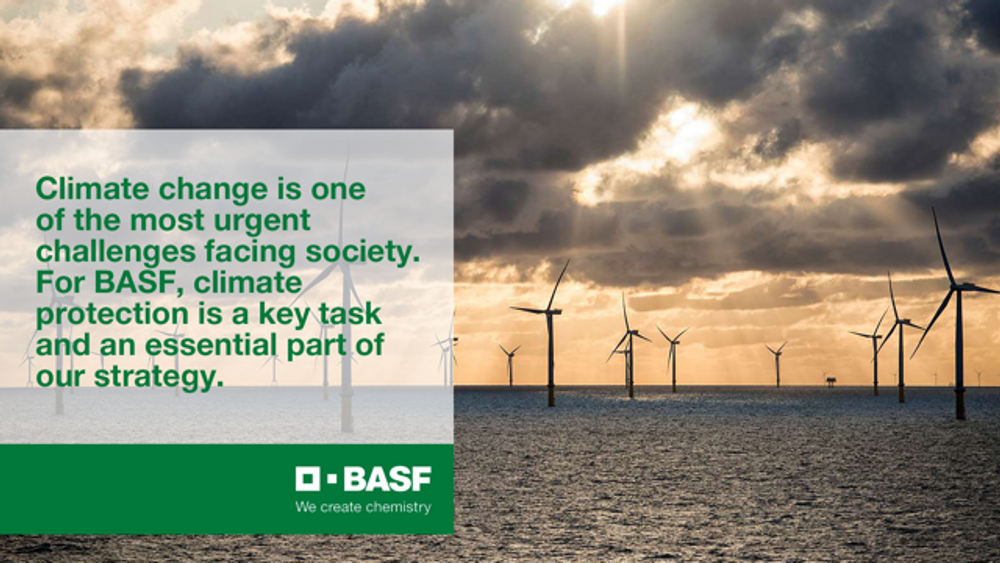
Eurowind fears large wind farms will reduce public support
The cost of building solar parks has increased significantly in the last two years. The cost of connecting to the grid, combined with the sharp increase in the price of the solar panels themselves, means that it makes the most commercial sense to build larger parks that are directly connected to the high voltage grid. Eurowind Energy says that the cost of building solar parks has increased by 25% and they believe that a profitable solar park would require an investment of at least around DKK 1 billion. As a result, Eurowind Energy has cut its pipeline and cancelled a total of 300 MW of solar projects. And Eurowind Energy believes that the increased costs could also lead to a complete breakdown in public support for renewable energy.
Tokyo Gas wants to enter Sweden and Finland
In January this year, Japanese energy giant Tokyo Gas announced a joint venture with Danish utility Ewii, called Towii Renewables. On 9 September, Tokyo Gas said it was looking to take the next step in Sweden and Finland by the mid-2020s. The company said Denmark is a very good market for onshore wind power and it is the reason that they started there before expanding to Sweden and Finland.
What we're reading
- Scale of Europe’s Energy Turmoil Exposed in Frenzied Crisis Week (Bloomberg)
- Vladimir Putin has forced the EU into a long-overdue energy union (Financial Times)
- France's public and private sectors race to adapt as winter energy crisis looms (France24)
- Salad days are over for European food producers as energy costs bite (Financial Times)
About Nordic Green News
The Nordic countries are some of the most dynamic and successful economies in the world. They are also leaders in sustainability, from renewable energy, biofuels, carbon capture and storage and the hydrogen economy, circular economy business models and battery development, the Nordics are pioneers in policy design, technology development and consumer uptake. Mundus Nordic Green News is covering this transition for the international community. Every day we curate the stories of most relevance to international businesspeople and policy experts from the flow of news. Mundus Nordic Green Indices summarise the meta-data from our daily coverage to enable easy tracking of trends. We supplement these with our own opinion pieces and commentary.
 Powered by Notified