10 October 2022

The expansion of wind power is losing momentum in Sweden
New data from the Swedish Wind Energy Industry Association shows that while wind energy projects are increasing, the number is too small and the pace too slow. Tomas Hallberg, who is responsible for permitting issues at the Swedish Wind Energy Association, says Sweden needs to expand at a rate that the current permitting rate cannot keep up with. According to Hallberg, Sweden will need to double its electricity production over the next 20 years. The Cementa incident revealed the lengthy and labyrinthine permitting process required in Sweden, with vetoes by local municipalities also causing problems. He said the forecast of 50 TWh of annual electricity production from wind power still holds until 2024, but will gradually slow down in 2026-2027.
Swedish cement innovator supported by Bill Gates
Swedish Cemvision wants to put an end to emissions in the cement industry, and has already attracted well-known investors. Now, it is reported that the billionaire Bill Gates' fund Breakthrough Energy is stepping in and supporting the company. "It shows that we are on the right track," says co-founder Claes Kollberg. In 2015, Bill Gates started the initiative Breakthrough Energy, which supports companies with climate-smart ideas through, for example, research grants, venture capital and networks. When the organisation announced during the night of 5 October which companies had been admitted to the research and mentoring program "The Breakthrough Energy Fellows program," Swedish Cemvision was on the list. The cement industry accounts for around 8% of the world's emissions, but by developing an alternative cement, reusing industrial waste as raw material instead of limestone and replacing fossil fuels with renewable electricity, Cemvision believes that they can gradually reduce emissions by up to 100%. "We hope that this gets the same international attention as Swedish fossil-free steel," says Claes Kollberg.
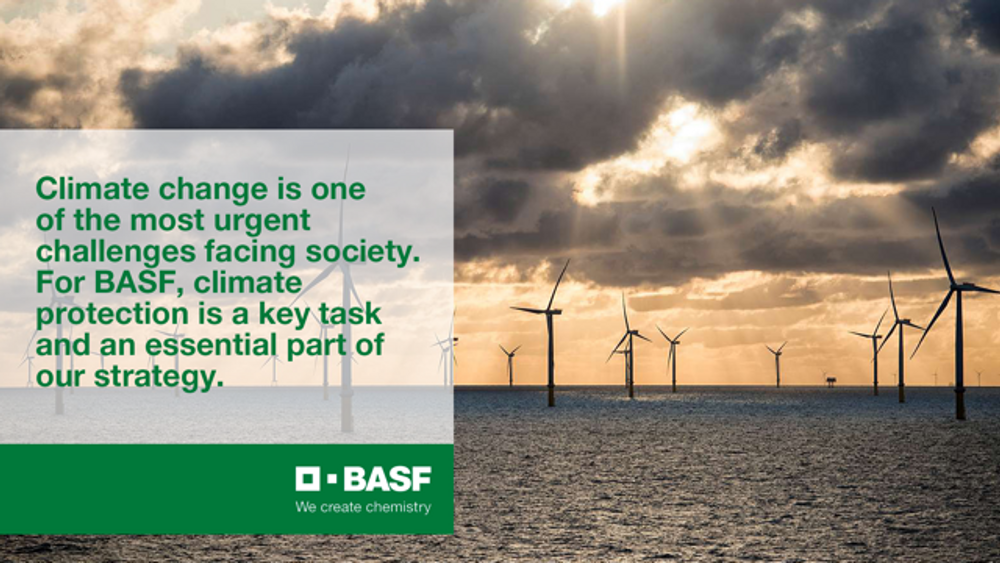
Arctic Paper participates in solar cell investment
Arctic Paper's three mills in Sweden and Poland produce a total of 700,000 tonnes of graphic paper per year. In order to produce it, energy is needed, lots of it, which has led the group to get involved in the energy sector in recent years. Today, the electricity business area already accounts for about 1% of Arctic Paper's turnover, but the goal is much higher. Arctic Paper already produces energy via steam turbines. However, the idea for the future is to invest more in solar, wind and hydropower, and the Polish mill already has a solar power plant corresponding to an energy production of 0.8 MW. As a step in this direction, this summer Arctic Paper opened a solar cell plant on the roof of the Grycksbo paper mill in Dalarna. Solar cell company.
Wind energy company Exilion invests in further expansion to support Finland's energy independence
By increasing domestic production, Finland is expected to become energy self-sufficient within two years, especially in nuclear and wind power. Exilion Tuuli Ky, a wind power company owned by the Finnish National Pension Fund (VER) and Veritas Pension Insurance, are starting construction of two new wind farms in northern Finland. The total investment is EUR 130 million. The two new Exilion Tuuli Ky wind farms will be located in the municipality of Ii, north of Ostrobothnia, and will have a total installed capacity of 100 MW, consist of 17 wind turbines and are estimated to produce 320,000 MWh per year. Construction will begin with road construction later this year, with turbine installation scheduled for the summer of 2024 and commissioning planned for early 2025.
Spanish energy giant Iberdrola might open an office in the Gävle region
The Spanish energy company Iberdrola has been established in Sweden and the opening of an office in the Gävle region, where they have a great interest in Svea Vind Offshore planned wind power projects. This week, the Swedish Land and Environment Court rejected Svea Vind Offshore's application for Outpost 2 outside of Axmar Bruk. Iberdrola has invested nearly SEK 100 million in project development in recent years. Currently, Svea Vind Offshore is also planning Greta's heels 1 southeast of Hudiksvall and Greta's heels 2 outside Söderhamn. Outpost 1, located outside Norrsunde, is still on the company's list of planned projects.
Plagazi and Gotlandsbolaget complete capital acquisition as industrial anchor investors and add SEK 53 million to the company
Plagazi AB and Vator Securities AB successfully issued several targeted new shares to new and existing shareholders, adding SEK 53 million to the company. Gotlandsbolaget has taken on the role of industrial anchor investor. The financing, led by Vator Securities, will play an important role in Plagazi's future expansion and demonstrates the confidence that major industrial anchor investors, such as Gotlandsbolaget, have in Plagazi. Gotlandsbolaget's decision followed months of financial, legal and technical due diligence. Gotlandsbolaget subsequently became a member of Plagazi's Board of Directors and is actively contributing to Plagazi's growth. In addition to Gotlandsbolaget, existing shareholders, including the Falkenberg Investment Group and the Granberg family, as well as new shareholders, participated in the new share issue.
Yara calls for urgent action to reduce Europe's food dependence on Russia
Yara called on the EU and national governments to act quickly and decisively to ensure that Europe reduces, rather than increases, its dependence on Russia for food and fertiliser. A strong European fertiliser industry is essential not only to ensure food security in Europe and globally, but also to ensure that Europe can continue to lead the green transition. Therefore, Yara addressed the European Parliament and other stakeholders and called for an EU fertiliser strategy. The EU's package of solutions for the European fertiliser industry should include the following measures:
- Ensuring continued access to natural gas
- Accelerating the use of renewable energy
- Strengthen the EU's strategic independence on fertilisers

SOLARSPRING reduces CO2 emissions and recovers resources from treatment plants through smart membrane technology
SolarSpring, a wholly owned subsidiary of Clean Industry Solutions, has developed a process that significantly reduces CO2 emissions from municipal wastewater treatment plants by extracting ammonia from the waste. The ammonia is not only removed from the wastewater, but is also used to produce a highly nutritious fertiliser that can be used on farmland. Wastewater treatment plants benefit from the fact that they avoid the necessary aeration technology, an energy-consuming part of the plant, and they also have the opportunity to reduce their carbon footprint. After testing under real-world conditions and a pilot phase, the membrane technology-based process is now ready for the next step: large-scale implementation.
Rejlers investing in renewable energy: Marita Niemelä leads new industry
Rejlers Finland is establishing a new division focused on sustainable energy solutions. Marita Niemelä has been appointed to lead the new sector. Niemelä has more than 30 years of experience in the energy, process, chemical and forestry industries. She is currently working at CSIRO's Australian Research and Innovation Centre, where she is responsible for the energy sector. Prior to that, she held management positions at Neste Engineering Solutions, Valmet, Metso and Pöyry. Niemelä has a PhD in technology and is a lecturer in biofuels and biorefining. Niemelä will start work at Rejlers early this year, when the new branch will also be established.
Companies innovating to produce hydrogen directly new offshore wind turbines
OX2 is investigating the start of hydrogen production at its planned offshore wind farm for Pärämere. Hydrogen production can take place at a centralised unmanned offshore station or individually in each power tower. Hydrogen refuelling stations may also be located on land. A hydrogen plant associated with wind power balances the energy production. At the same time, the pure oxygen produced as a by-product can be blown into the Baltic Sea floor, which is suffering from oxygen loss, thus allowing for improved biodiversity.
Siemens Gamesa and Vattenfall are also both developing offshore wind turbines that can produce their own hydrogen. Siemens Gamesa, together with Siemens Energy, invested in a EUR 120 million hydrogen project that will be integrated directly into the electrolysis plant of the SG 14-222 DD wind turbine. With a total output of 14 MW, it is currently the company's most powerful wind turbine.
In May, Vattenfall announced that the UK government has allocated EUR 11 million for the Hydrogen Turbine 1 pilot project, which will be the first in the world to connect an electrolysis plant directly to an operating offshore wind turbine. If Vattenfall wins the bid at the Dutch offshore wind farm Kust West this fall, three wind turbines will be installed in a 45 MW hydrogen cluster that will be connected to vessels containing electrolysis cells, transformers and batteries.
New offshore wind turbines could produce hydrogen
Siemens Gamexa and Vattenfall are both developing offshore wind turbines that can produce their own hydrogen. Until now, offshore wind farms have operated by transmitting electricity from the wind turbines to the land via cables. But soon, turbines will also be able to produce hydrogen directly at sea. Hydrogen can be piped to shore and used as a green fuel for high CO2 industries such as shipping and aviation as well as for heavy road transport. In 2021, Siemens Gamesa, together with Siemens Energy, invested in a EUR 120 million hydrogen project that will be integrated directly into the electrolysis plant of the SG 14-222 DD wind turbine. With a total output of 14 MW, it is currently the company's most powerful wind turbine. It is not only Siemens Gamesa that sees the potential of offshore hydrogen wind turbines. In May, Vattenfall announced that the UK government has allocated EUR 11 million for the Hydrogen Turbine 1 pilot project, which will be the first in the world to connect an electrolysis plant directly to an operating offshore wind turbine. If Vattenfall wins the bid at the Dutch offshore wind farm Kust West this fall, three wind turbines will be installed in a 45 MW hydrogen cluster that will be connected to vessels containing electrolysis cells, transformers and batteries.
Pirkanmaa plans to build a huge park with up to 25 wind turbines
Energy company Ilmatar and forestry company Finsilva are planning to build a new wind farm in Virrii. 20-25 wind turbines may be installed in the planned area of Vermassalo, owned by Finsilva. The total power rating of the plant is 200 MW. The wind farm will start generating electricity in Vermassalo, Virtai, in 2027 or 2028. The project company will submit a planning initiative to the city in October.
Denmark's Left Party wants to sell Ørsted
Venstre, the Danish Left Party, and second largest party in the Danish Parliament, has presented its Green 2030 plan. The plan includes investing DKK 60 billion in climate and the environment by 2030. As part of the plan, Venstre will allocate funds for the development of green fuels through Power-to-X technology, which converts renewable energy sources. This part of the program is particularly beneficial for central and western Jutland, as wind energy is required to produce green fuels using Power-to-X. According to the Venstre, the Danish Left Party, the state must also continue to maintain ownership of parts of energy companies that can be described as critical infrastructure, but divest at least part of the renewable energy business. On 7 October, Venstre thus announced that the state must sell its share in Ørsted, but maintain co-ownership in the part of the company that can be described as critical infrastructure. “By selling the state's ownership stake in Ørsted's wind turbine business, the state retains ownership of Ørsted's cogeneration plants. In Venstre, we believe that we should retain the state’s share of ownership of Ørsted’s combined heat and power plants, which today only constitute a small part of the company’s total business,” notes a statement from the party.
What we're reading
- Biden will attend COP27 — the U.N’s climate change summit — in Egypt (Washington Post)
- US and Germany lead calls for climate action at World Bank meetings (Financial Times)
About Nordic Green News
The Nordic countries are some of the most dynamic and successful economies in the world. They are also leaders in sustainability, from renewable energy, biofuels, carbon capture and storage and the hydrogen economy, circular economy business models and battery development, the Nordics are pioneers in policy design, technology development and consumer uptake. Mundus Nordic Green News is covering this transition for the international community. Every day we curate the stories of most relevance to international businesspeople and policy experts from the flow of news. Mundus Nordic Green Indices summarise the meta-data from our daily coverage to enable easy tracking of trends. We supplement these with our own opinion pieces and commentary.
 Powered by Notified